Electric Telegraph
Electromagnetic Waves
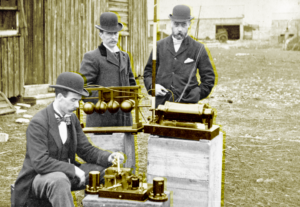
Heinrich Hertz proved that electricity can be transmitted in electromagnetic waves. He conducted experiments in sending and receiving these waves during the late 1880s. He discovered the progressive propagation of electromagnetic action through space and measured the length and speed of these electromagnetic waves. These waves conclusively confirmed Maxwell’s prediction of the existence of electromagnetic waves, both in the form of light and radio waves.
Ground Radio Waves
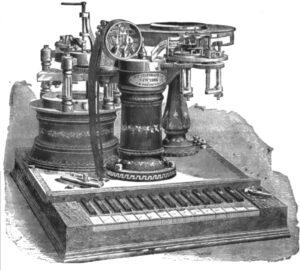
By the early 1800s, these mechanically-operated visual telegraph lines were fairly common in Europe, although only a few simple links were ever built in the United States. Visual telegraphs were slow, covered limited distances, and were usable only during good visibility, so inventors worked to develop a way to send signals by electrical currents along wires, which promised nearly instantaneous transmissions over great distances in all kinds of weather.
In the end, it turned out that there was in fact no way to send standard electrical currents for long distances through the ground. However, in 1895 Guglielmo Marconi would discover the next best thing—ground wave radio signals—which were radio waves that used the earth as a wave guide, traveling across land and sea to the “great distances” envisioned by Steinheil. And Marconi would later also employ “sky wave” signals, which could travel “through the air” and across the Atlantic.