Pioneering U.S. Radio Activities
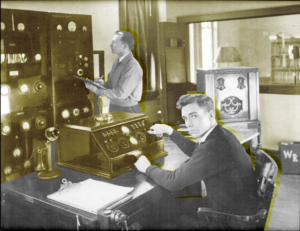
Marconi Wireless Telegraph Company of America
Guglielmo Marconi, an Italian inventor, brought electromagnetic waves out of the laboratory and into the world. He began with short-distance broadcasts in his own backyard. In September 1899, he astounded the world by telegraphing the results of the America’s Cup yacht races from a ship at sea to a land-based station in New York. By the end of 1901, Marconi had founded his own commercial wireless company and broadcast the first transatlantic signal.
Radio Before World War I
On the West Coast of the United States, for example, Charles Herrold began operating a wireless transmitter in conjunction with his radio school in San Jose, California, about 1908. Herrold was soon providing regularly scheduled voice and music programs to a small local audience of amateur radio operators in what may have been the first such continuing service in the world.
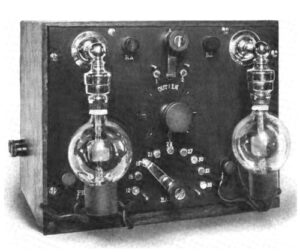
The radio hobby grew during the decade before World War I, and the ability to “listen in” with earphones and occasionally hear voices and music seemed almost magical. Nevertheless, very few people heard these early broadcasts—most people merely heard about them—in part because the only available receivers were those handmade by radio enthusiasts, the majority of them men and boys.
Early broadcasters in the United States, such as Herrold, would continue until early 1917, when federal government restrictions forced most radio transmitters off the air for the rest of World War I, stalling the growth of the medium.