New Initiatives
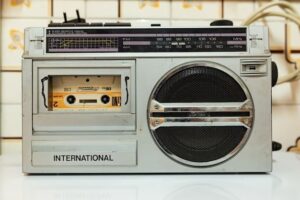
FM Growth
The decades between 1960 and 1980 witnessed the slow development of competition between established public-service broadcasters as well as the growing popular appeal of advertiser-supported music formats on pirate stations or developing local outlets. The use of FM radio expanded in many nations, allowing for more radio channels and, thus, more program variety.
During the 1960s FM radio became the fastest-growing segment of the broadcast business in the United States. In 1961, the FCC approved technical standards for stereophonic radio, a decision that helped place FM at the centre of the country’s growing interest in high-fidelity sound while also providing a service not available on AM.
Pirates and Public-Service Radio
Despite their high-quality programming, Europe’s monopolized public-service radio systems provided little popular music and no opportunity for broadcast advertisers. In 1958 the first “pirate” broadcasters appeared, using transmitters built into small ships moored beyond territorial limits. All the affected countries passed laws to limit advertiser support and provision of supplies to such broadcasters, but the transmissions continued, rapidly building huge audiences. Land-based pirate stations appeared in several countries, but many were short-lived because of stringent laws limiting their operation.